Philosophical Considerations
A great deal of research went into Memento Mori. This page breaks down some of that research. The full paper will be available on UCF's STARS system in 2027, and will be linked here when public.
Directionality and Subliminal Messaging
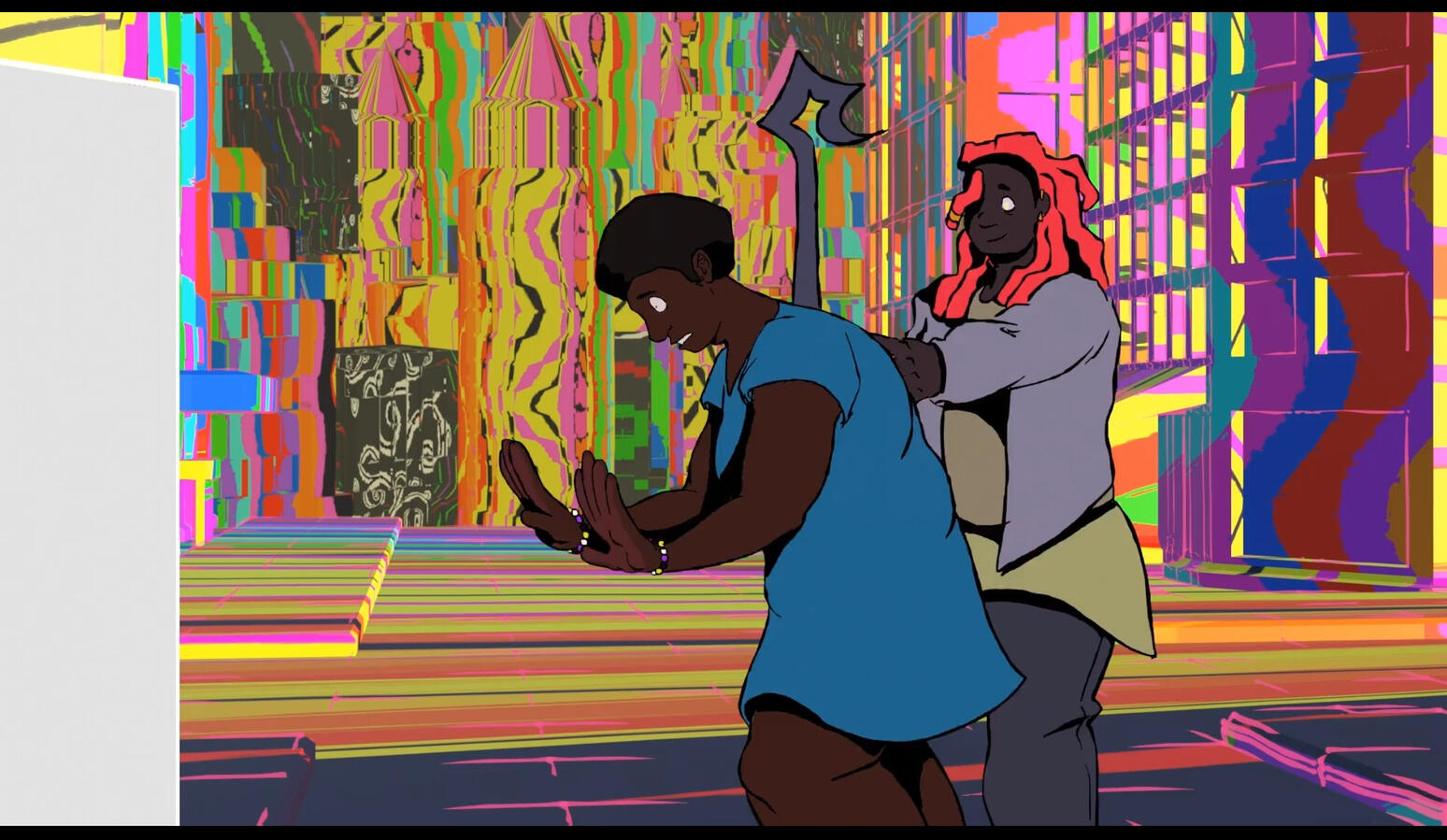
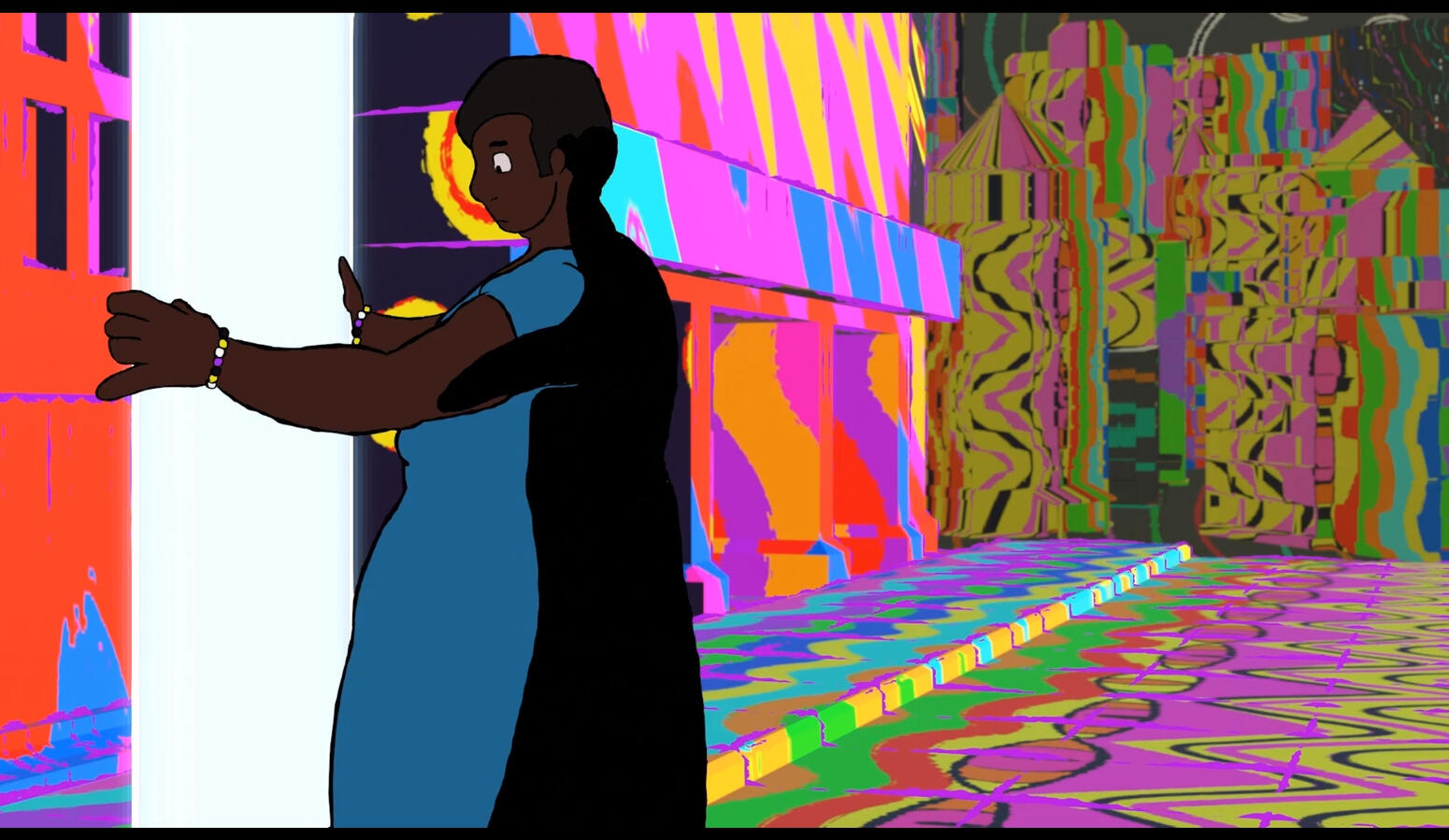
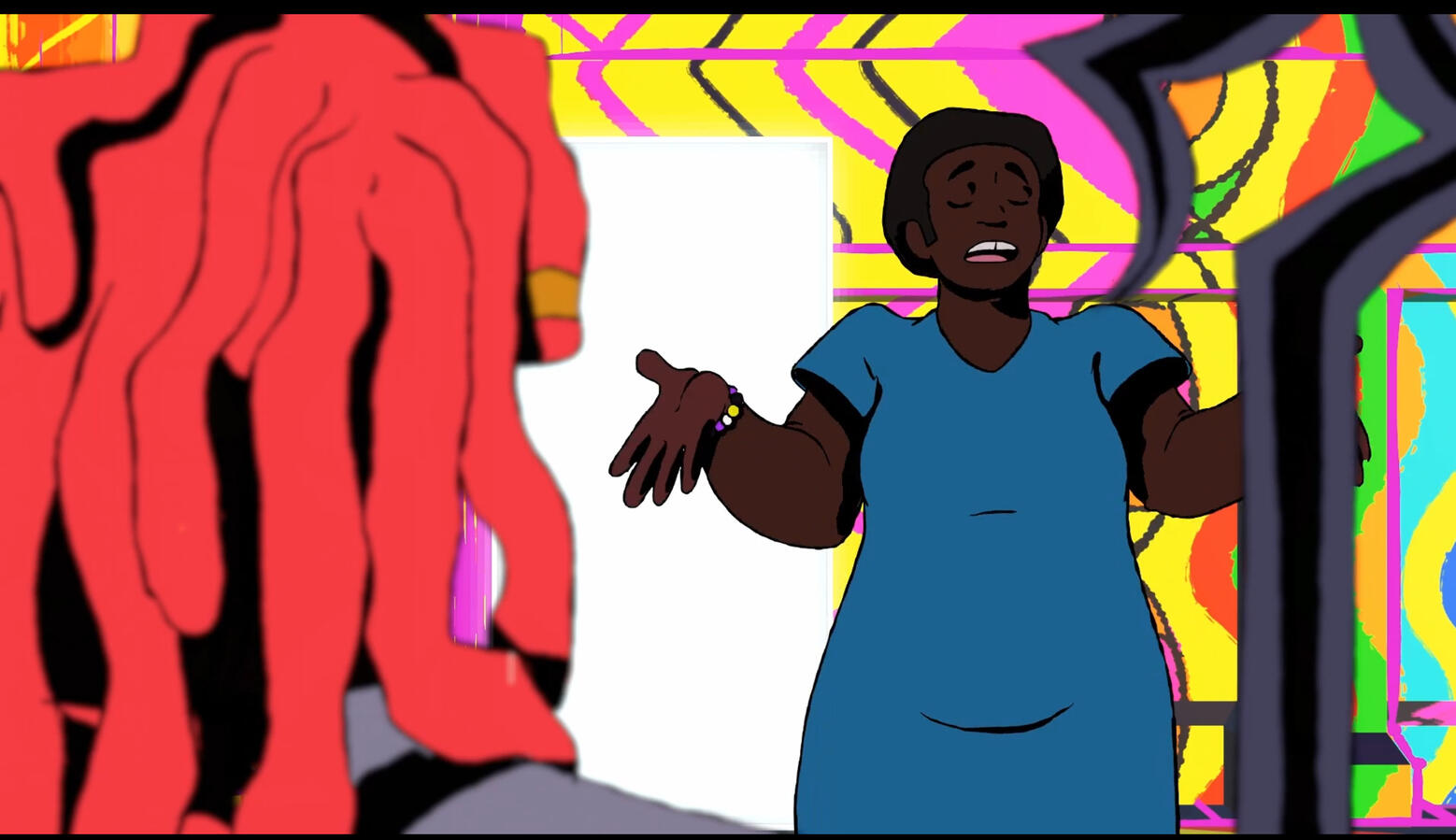
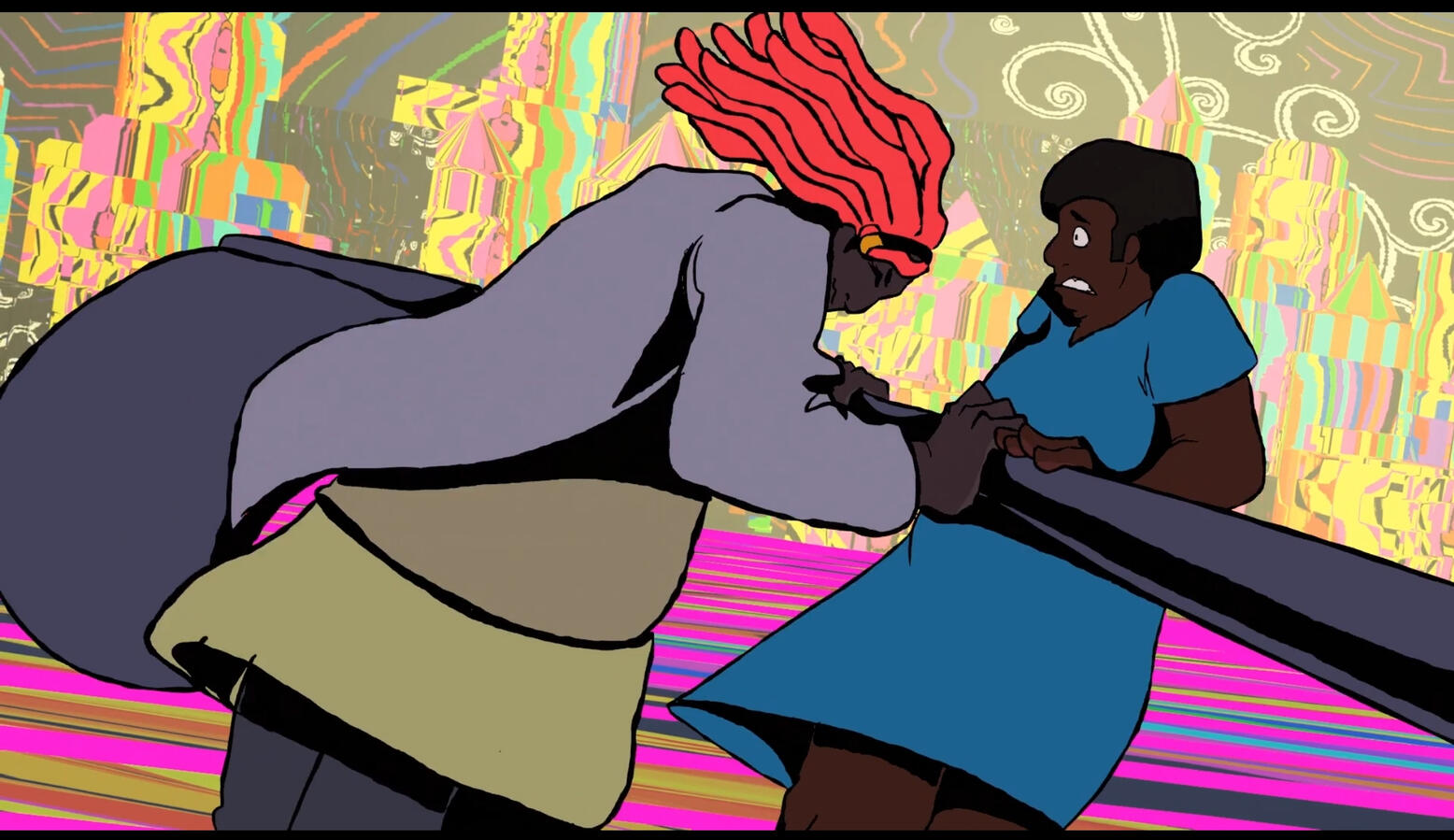
Within Memento Mori, careful attention has been paid to composition as a method of subliminal audience manipulation, particularly in following a precedent established by Alfred Hitchcock. The primary analysis of this methodology is presented in the study Which Way Did He Go? Directionality of Film Character and Camera Movement and Subsequent Spectator Interpretation by Egizii et al.. This comprehensive study has been the primary resource for application of this analysis.For a majority of Memento Mori, Dead Human Walking moves from right to left across the screen. This is to engender a feeling of unease in the audience, following the patterns set by Alfred Hitchcock. wherein "a character who is good, and is on the left, or ‘evil’ side of the screen should strive to laterally move to the right side of the screen, and this movement could be perceived as positive or natural, while the opposite feelings will be experienced by an audience witnessing a character moving from the right or good side of the screen toward the left or evil side” (Egizii et al., 10).As the narrative progresses and Red pushes DHW further towards their unwanted Afterlife, they are being forced into a weaker position despite continuously trying to avoid it. It is only once they make the decision to reject death that they begin to be seen moving from left to right. Having taken control of their circumstances and made up their mind, they fight their way back to life, to the right-hand side of the screen.This shorthand is to Red as well. Not only is she most frequently shown further leftward than DHW, but when she loses her temper with DHW and chooses violence to enforce her orders, she is moving from right to left across the screen. This demonstrates that her choice is the wrong one for her. She is putting herself in the “evil” position despite her better nature, emphasized in the post-credits sequence that positions her on the right side, contrasting the other Grim Reaper she is having lunch with. During the final shot in which she is seen, when she rolls onto her back on the pavement, she is shown moving left to right in order to communicate that her anger is not wrong, but she directs it at the wrong target. She has right to be frustrated but does not have the right to punch laterally at DHW, being a victim of similar systems rather than an enforcer of those systems. They are both victims on the same stratus of power, both oppressed by those above them, despite neither force being physically seen on-screen; DHW’s boss exists only as texts on the screen, and Red’s boss is only alluded to via her actions.
Psychedelia
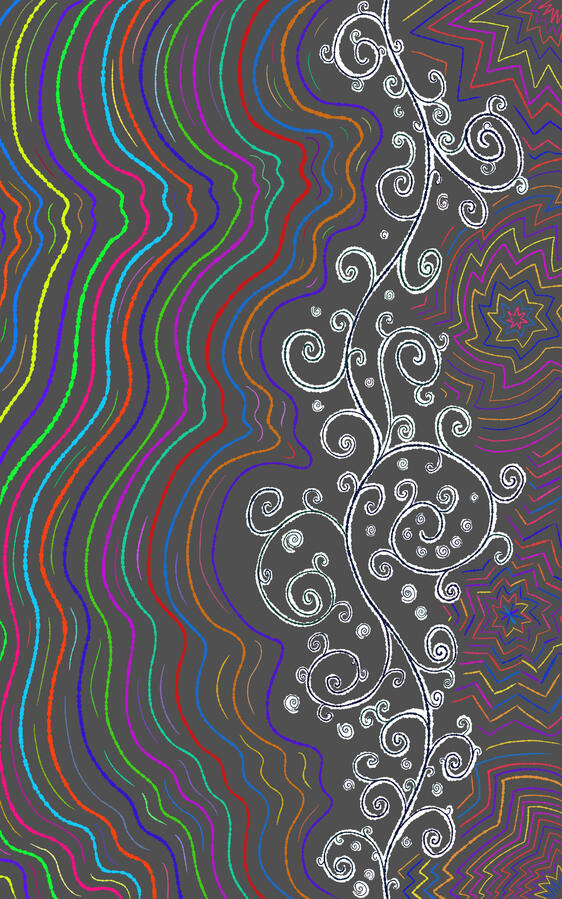
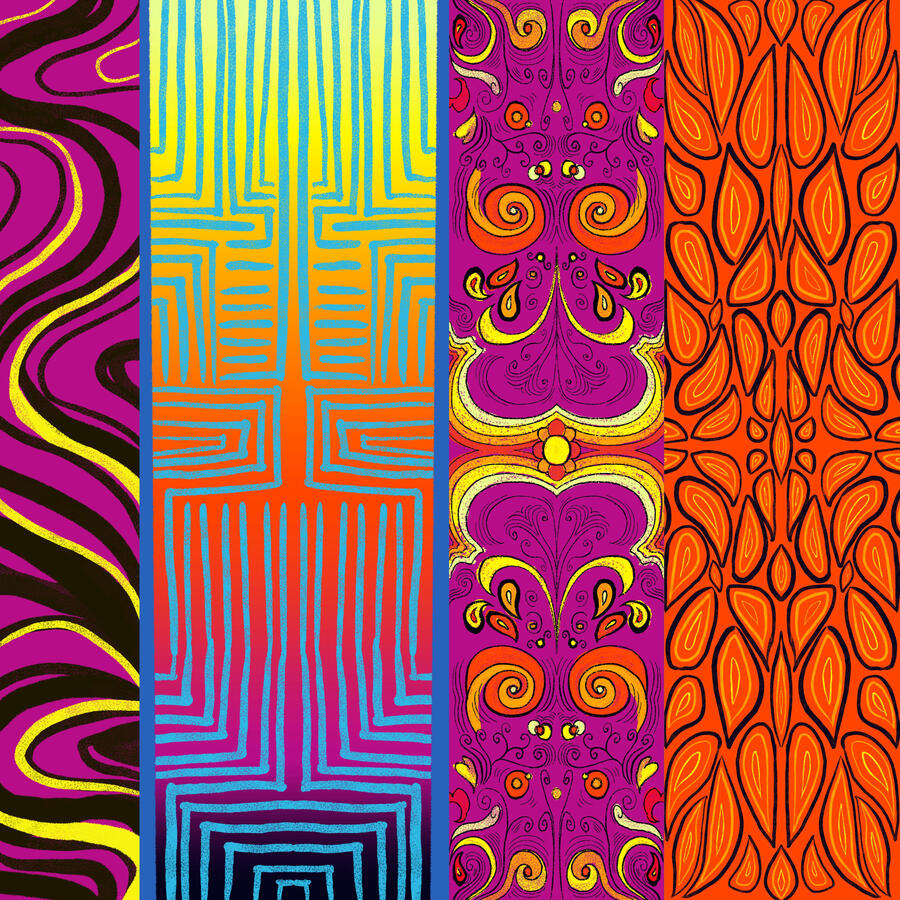
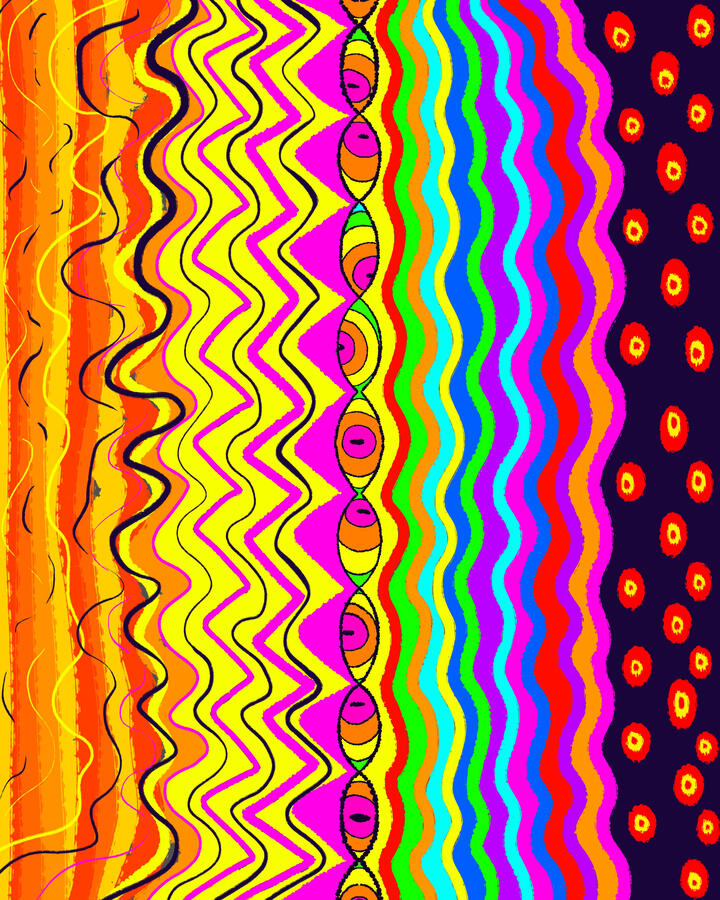
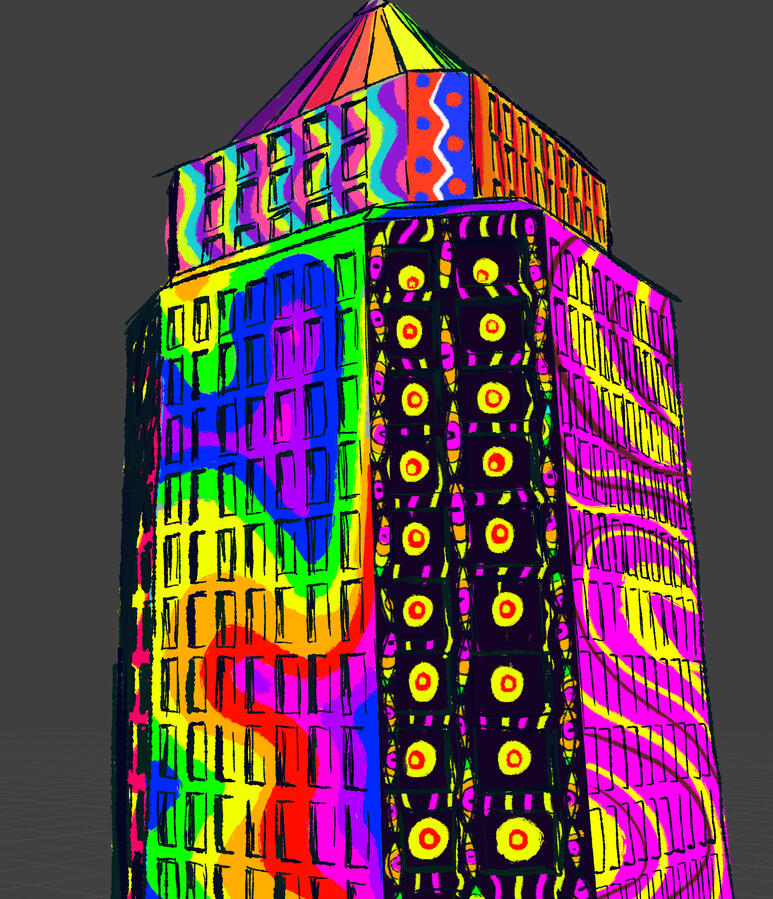
The Subconscious and Death via Altered StatesPsychedelic imagery is used for the In-Between in Memento Mori for a wide variety of reasons: Its perception as being borne from the subconscious, the pervasive notion in popular culture that psychoactive substances unlock parts of the mind previously untraveled, the connection between altered states and near-death states, its rich history as protest art its modern connotation being lowbrow kitsch not fit for art academia. The core thesis of psychedelic art is making real the unreal, making physical that which lives inside the mind or inside the moment.While much research is still to be done on the subject, preliminary studies and general observation suggest that the brain activity during near-death experiences (NDEs) and while under the influence of certain psychoactive substances are extremely similar (Martial et al. 12). This is part of why psychedelic imagery was chosen for DHW’s In-Between and the influence of psychedelia as a whole within the narrative cannot be understated. The narrative follows a commonly articulated experience when discussing psychedelic experiences: DHW enters “an alternative ‘realm’,” meets an “entity” and has an altercation with her which prompts them to reflect on life, death and the afterlife (Timmermann et al.). The environment of their In-Between is made of “brilliant colors,” containing “wavy lines” and “geometric patterns,” all of which undulate and are otherwise animate (Birren 33). This visual chaos is meant to reflect the impossibility of reckoning with near-death, the visceral horror of experiencing one’s life slipping away.Psychedelia and Near-Death ExperiencesAt present the medical industry is examining the usage of drugs such as N,N-dimethyltryptamine and lysergic acid diethylamide, otherwise known as DMT and LSD respectively, in the interest of finding therapeutic uses for these drugs. DMT is a “potent serotonin receptor agonist[…] known for [its] profound psychoactive effects” whose “mechanism of action involves potent agonism at the 5-HT2A receptors in the brain, leading to significant alterations in mood, perception, and cognition” (Kargbo 1812). Put more simply, DMT places the mind in a suggestible state with heightened emotional impact. This is similar to the altered states of panic and terror often found in NDEs.“The near-death experience has been associated with long- term positive changes in psychological well-being and related outcomes; more specifically, greater concern for others, reductions in distress associated with the prospect of dying, increased appreciation for nature, reduced interest in social status and possessions, as well as increased self-worth have all been observed and/or described post NDEs,” describes Timmermann et al. on page 2. These effects are then directly compared to those of psychedelic use, especially a decrease in anxiety surrounding death, an increase in environmentalist considerations and, in those with depression, “significant clinical improvements” (Timmermann et al. 2). “Thus, overlap between near-death and psychedelic experiences may extend beyond the acute experience into longer-term psychological changes” (Timmermann et al. 2).Psychedelic Art HistoryWhile the 1960’s psychedelic movement is in current day oft regarded as a movement centered around partying and an aesthetic now deemed kitschy and unserious, contemporarily it was much more serious (Grunenberg). The psychedelic movement was in fact a widespread multimedia explosion of artistic expression focused on human experience with a decidedly anti-war, anti-academic bent. Psychedelia is art referred to by Christoph Grunenberg as “art with no history,” an art movement “neglect[ed] … by serious historians and academics [in] much more than just a case of selective amnesia.” This mirrors capitalist suppression of the worker and their rights, the way in which this culture employs conquer-and-divide methods of isolation, of making the individual feel so alone they feel powerless to resist. This is something the psychedelic artists of the 1960’s knew intimately and rejected; psychedelic art revels in humanity, in excess, and “[i]t is precisely in psychedelia’s insistence on the endless proliferation of ‘useless’ ornament, its indulgence in sensual, ‘non-functional’ materials, its valuing of the ecstasy of physical and mental experiences over rationalized form and enlightened theoretical discourse, that we can find a powerful esthetic expression not only of protest but also of genuine democratic spirit” (Grunenberg 13).The presence of mind-altering substances influencing art traces further back then the 1960s and 1970s, despite that era being the most common reference point of psychedelic art in modern discussions. The existence of pottery in Minoan culture utilizing psychedelic imagery suggests that this tradition reaches back into our earliest cultures (Foster 490). The phenomenon was simply given a name in 1956 (Grunenberg 14). Even artworks not commonly considered psychedelic, such as Picasso’s Blue period works and the works of other artists in the Belle Époque, were likely made under the influence of opium (Foster 490).
Anti-Exploitation
A fundamental core of Memento Mori's narrative is the anti-exploitation messaging. Having experienced exploitation both in the retail industry and the animation industry, combined with anecdotal evidence from others who have lived through similar situations, the author feels confident in their assertion that all labor under capitalism is exploitative by design. From the retail manager scheduling ‘clopens’ (closing shift one night followed by an opening shift the next morning) to the various pro-bono ‘passion projects’ and revenue share opportunities I’ve worked, one thing is consistent: a job will demand more of its workers than humanly possible. This is by design.The ‘cure’ to the ill of demanding, exploitative jobs is a firm refusal to be exploited. By rushing to work early, DHW risks their life and pays the price for it: a price many disenfranchised workers have paid across the last century, the loss of their life. Whether literal, like DHW, or metaphorical, like Red, capital subsumes one’s life and churns it into profit.The Animation Industry vs. Locking TechnologiesAnimation is, almost by necessity, a collaboration between artists. Not only is no art ever made in a vacuum untouched by others, but larger projects are usually made by studios of animators, not one individual. Films like Memento Mori with dialogue and mixed-media aspects require expertise outside of the artist’s field.Yet despite animation’s democratic nature, the industry, like all current industries, “reflects, above all else, the wishes of a small group of majority shareholders” (Saito 197). These shareholders, more often than not, care only for profit—not for art.The French philosopher André Gorz within a variety of his works discusses the concept of open technologies and locking technologies, explained by Kohei Saito as, “[o]pen technologies are those that involve exchange with others, that relate to communication and cooperative industry. By contrast, locking technologies are those that divide people, that turn users into slaves and monopolize the provision of products and services” (Saito 141). On the surface it would seem innate that animation is the product of open technology. Yet despite the media being so inherently connective, the professional field is ruled by locking technologies peddled by companies for whom profit is more important than product. It benefits these companies to embargo their programs and equipment to maintain a sense of prestige, an artificial scarcity not of goods but of knowledge itself.Gorz addresses this in more detail in his work L’Immateriel (English: The Immaterial), when discussing franchising and the shifting nature of capital itself. He terms this more immaterial labor “knowledge capital,” explaining it as, “simply the privatization of forms of knowledge or know-how patented under a brand name, the use of which is leased out to the companies that implement it […] the value of an item of knowledge ‘is entirely linked to the capacity to monopolize the right to use it’” (Gorz 69; interior quote from Rullani). With job listings shifting towards emphasizing years of experience with particular software over actual portfolio reviews, and corporations cracking down on illegal use of their properties, we are witnessing a restriction of artists’ rights. Supposedly this is done in defense of artists, but truly, it is the corporations who are being defended.
Technology Rights and Economic Accessibility - Libre Software
vs. Industry Standard
Digital art is created with technology. Computers, drawing tablets, and other devices are all governed by capitalism and thus, not all are accessible to everyone. It is necessary to examine what is and isn’t available to all artists, and the ways in which corporations responsible for creating the software and hardware necessary to this field also create artificial intelligence scarcity for their own benefits.SoftwareLibrePlanet, an organization existing within the Free Software Foundation (FSF), defines free software as the following: “software that respects users' freedom and community” (LibrePlanet). This includes giving users the right to “run, copy, distribute, study, change and improve the software,” analogous in their words to ‘free speech’ (LibrePlanet). An alternative term is “libre software,” to distinguish between the definition of free as costless and free as liberated, an homage the FSF pays to the rich history of political writing from Spain, France, and Latin America. It is worth noting that not all libre software is free, and not all free software is libre software. While open source software is often also libre software, this is not always the case. A software is not libre software unless the users control the program, not the other way around.At present, free software and libre software seem widely disregarded by the animation industry. A majority of artists this author has consulted about the concept of switching from industry standards to other software have balked at the idea of adjusting to different interfaces and methods of creation, prioritizing the comfort and familiarity of the industry standard over all else. While understandable, this does speak to “the unprecedented levels of powerlessness experienced by those of us living in the Global North. We feel, unconsciously, that we have no say and that we cannot exist without capitalism” (Saito, 136). Specific corporations have embedded themselves so thoroughly in the art professionalism world that working with other software is regarded as not worth the effort. However, when the means of creation becomes locked behind perpetual-renting software subscriptions, the capacity to participate in digital art itself becomes tenuous. It is unreasonable to expect artists to pay in perpetuity to maintain their careers, and it is unreasonable to regard those who refuse to—or simply cannot—comply as unprofessional and bar them from opportunities based on their lack of access to subscription software.Regardless of where the technology originated or if its widespread adoption was due to its efficiency, by now it is plainly obvious that these corporations no longer care for serving artists. Rather, they only care for placating their shareholders. It benefits them to restrict and limit what artists can do with their software; technical problems with Adobe products are not to be solved by the user themselves, but to be reported to the corporation in hopes they might fix the issue eventually, should it prove profitable for them to do so. A majority of end-users do not have the necessary skills to problem-solve on their own anymore, as well.
This ties into Saito’s discussion of “subsumption to hegemony”: The phenomenon of capital to “[rob] us of our skills and self-sufficiency,” to make us “unable to survive independently of the power of commodities and money. We’ve become so used to the ease of this way of life that we’ve lost the ability to imagine any other” (Saito 137). He continues, “Human labor was once united at the level of conception and execution […] Capital, though, views this unified flow as inconvenient […] it becomes hard to control the pace of production and labor, which makes it difficult to raise productivity” (Saito 137). The concept of an artist who can create a work entirely by themself, especially with nonstandard software, is a threat to corporate propaganda with regards to a ‘right’ and ‘wrong’ way of artmaking.
In essence: the ‘divide and conquer’ approach to artmaking, dividing software into acceptable and unacceptable (or professional and unprofessional) categories, benefits only the companies that sell this software.The death of technological knowledge has allowed capital to subsume what was once a very communal space: that of the computer. Capital views one-time purchases as inconvenient; how can they sell new product if the old works just as well? Every user who declines a more expensive technological upgrade is viewed as lost profit. This has moved beyond labor and into passion projects, into the whole realm of digital art, as the author has personally witnessed in many Internet forum discussions the recommendation that industry-standard technology is the best to learn regardless of the individual’s needs. The endless promotion of this locking technology further alienates the artist from the true means of production, from true freedom of software.
This is not to say that all artists should learn complex coding and create their own software. We do not need to reinvent the wheel every time we wish to draw a circle. But it is pertinent to remember that these programs began as community efforts and lost that identity due to corporatization. This is not an inevitable truth of software development, as the mere existence of the Blender Foundation, GNU, and LibrePlanet prove otherwise. The fact of the matter is that humanity’s default nature is helpful. We are a social species that thrives off connection. This threatens the hold of capitalism, which demands we all be individuals reliant solely on corporations—people who have no one to turn to except those who only want their money.
HardwareAt time of writing, the hardware needed to meet standards of the software used is relatively accessible; those with disposable income can acquire this hardware pre-owned for lower prices than most modern hardware. Unfortunately the hardware industry in 2026 is changing drastically, with demand increasing for older hardware. As newer hardware is often inaccessible before it even releases to the public—if it will be publicly available at all—the outdated models will become more appealing and thus also less accessible, as there may not be enough supply to meet demand.“These companies are post-consumer. They do not need you right now. Private equity and these large companies want to make sure that you not only rent your home and lease your car, but subscribe to your computer,” begins a video from technology news YouTube channel GamersNexus. The host proceeds to discuss statements made by Nvidia and speculation from those outside the company that indicate consumer-grade GPUs and RAM will be manufactured at lower quantity and therefore made less accessible. This decision was made in favor of selling corporate-grade materials to private companies. Due to the AI bubble growing and subsequent increase in investor interest in corporate data centers it seems corporations like Nvidia are chasing maximum profit.One potential solution posited by the very companies causing this problem is a hardware rental model. Nvidia has offered this since 2017 through their “GeForce Now” subscription service. GamersNexus explains: “Nvidia will let you subscribe to an RTX 4080 for $20 per month for eight hour sessions at a time, with a maximum of 100 hours of playtime monthly […] For $240 dollars per year, you can play games with, quote, ‘typically no wait,’ asterisk, end quote, unless of course a lot of people want to play, like when a new game comes out. The $10 dollar per month tier doesn’t even specify what GPU you’ll get, just that it’s GeForce RTX” (GamersNexus). This could pose a problem for programs that require precise specifications for maximum efficacy.As more artists become priced out of hardware, they will equally be pushed from the digital art field, rendering digital artists an artificial scarcity of their own. Now more than ever, it is important to ‘vote with your wallet’—to buy secondhand, to refuse buying into needless subscriptions, whether they be software or hardware, and to reconnect with alternative methods of artmaking. Capital will not eliminate the digital artist—capital has not eliminated the artisan in general, but rather, made their path to success narrower—but these developments will necessitate change in the field. There are two paths to pick from: capitulation, bowing to perceived authority and allowing them to restrict the methods of creation, or protest, refusing the ever-present squeeze of capitalism and embracing free, open-source, and/or libre software.
Bibliography
Birren, Faber. (1978). Color & Human Response. New York, NY: Van Nostrand Reinhold Company.Egizii, Matthew L., Denny, James, Neuendorf, Kimberly A., Skalski, Paul D., Campbell, Rachel. (2012) Which Way Did He Go? Directionality of Film Character and Camera Movement and Subsequent Spectator Interpretation. Cleveland, OH: Cleveland State University.Gorz, Andre, & Turner, Chris. (2010). The Immaterial. Calcutta, India: Leelbati Printers.Grunenberg, Christoph. (2005). Summer of Love: Art of the Psychedelic Era. London, UK: Tate Publishing.Kargbo, Robert B. (2024). Innovative Psychedelic Therapies: Harnessing 5-MeO-DMT and DMT for Mental Health Treatment. ACS Medicinal Chemistry Letters 15 (11), pp 1812-1814.LibrePlanet. (2023). About/Mission Statement. Online: LibrePlanet.org, pp 1. LinkNexus, G. (2025, December 22). NVIDIA: WTF?. Online: YouTube. LinkSaito, Kohei, & Bergstrom, Brian. (2024). Slow Down: The Degrowth Manifesto. New York City, NY: Astra House.Timmermann C., Roseman L., Williams L., Erritzoe D., Martial C., Cassol H., Laureys S., Nutt D., Carhart-Harris R. (2018). DMT Models the Near-Death Experience. Front. Psychol. 9:1424, pp 1-10.